Showing posts with label ostomy. Show all posts

Thursday, 7 April 2016

Stoma Care FAQs


While there is tons of information about stoma care available over the internet, sometimes it’s a better idea to look at the basics rather than getting lost in the complexity of details. In this article, we will discuss the fundamentals of stoma care by answering some frequently asked questions.

How to stop an ostomy bag from ballooning up?

Ballooning of an ostomy bag happens due to wind. Although there are five filters in an ostomy bag, they can stop working when they get wet. One of the ways to avoid the ballooning of this bag is to avoid consuming gas-producing foods and drinks. You can also burb your ostomy bag if it can be drained.

Does getting a camera into the stoma hurt?

Some people think that having a camera into the stoma must be a very painful experience. Having a camera into the stoma may be a necessary part of a diagnostic procedure. Since you will have to remove your bag for a moment, you may be worried about the unexpected evacuation of waste materials from the stoma during the checkup. The best practice is to take bowel prep before the checkup if you have a colostomy. And if you have an ileostomy, you may have to fast for some time before the procedure. Make sure to take a spare ostomy bag as your doctor will remove the existing bag before getting the camera into your stoma.

What is the right way to deal with a hernia?

A hernia can be quite an irritation, whose discomfort can range from difficulty wearing an ostomy bag to pain in the peristomal skin area. You may wonder where to get hernia support wear from. However, it will depend on the local prescribing guidelines. Your stoma care nurse will help you know what is available in your locality. Therefore, you will prescribe you any hernia support wear depending on that availability.

How to deal with red, sore skin under the flange

Sore skin can be quite painful. First and foremost, you will need to determine the reason for this soreness. Is it because of the wrong-sized hole in the flange or stomal output getting in contact with the peristomal skin? Leakage is the biggest reason for this skin irritation. In such a scenario, the best practice is to consult with your stoma care nurse as soon as possible. They may suggest you a barrier spray to help your sore skin. You can also try a home remedy consisting of Gaviscon liquid.

What to do with an ostomy bag peeling up on one side

Clothes rubbing against the edges of your baseplate can cause them to lift. It can be significantly difficult to get those edges back after they detach from your peristomal skin. One of the ways to deal with this issue is to use some micropore tape to stick the peeled-off tape back. You can also use flange extenders after getting a prescription from your ostomy care nurse. These extenders come in a semi-circle shape and stick around the edges of the flange.

Thursday, 4 February 2016

What Is An Ileostomy?


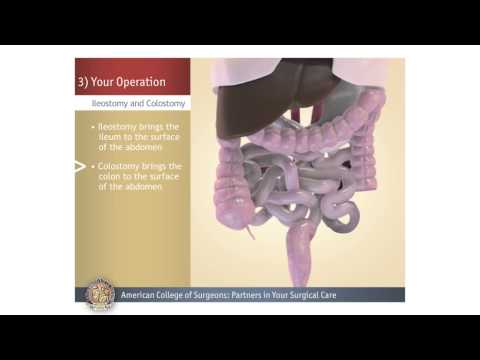
The stoma created on the small bowel, also called the ileum, is known as an ileostomy. This stoma, or opening, is a part of the small bowel, which means that it is brought out through a cut in the belly during a surgical procedure. As a result, it passes out stools, bypassing the colon and rectum. It is usually on the right-hand side of the abdomen, and it may be permanent or temporary.

Some most common diseases that may result in you requiring an ileostomy may include the following.

  • Ulcerative colitis: This condition refers to the inflammation and ulceration of the lining of the large bowel and rectum. This condition is identified through diarrhea, bloody stools, cramping pain, fatigue, anemia, weight loss, and other painful symptoms.
  • Crohn’s disease: This condition is also an inflammatory disorder that can affect any part of the GI tract and result in symptoms such as diarrhea, pain, bloody stools, mouth ulcers, fatigue, anemia, and weight loss.
  • Cancer: The growth of cancer cells in the colon can result in a patient requiring an ileostomy.
  • Familial adenomatous polyposis (FAP): This condition is usually inherited from children from their parents, as suggested by the name of the disorder. It usually affects the colon and rectum. These polyps can become cancerous if left untreated.


Wastes passing out of an ileostomy

The primary function of the colon is to absorb moisture and salts while digestive waste passes through it. With the colon removed, the patient has to expel bodily wastes through the ileostomy. It means that those wastes may be watery-loose because there is no colon to absorb moisture. The consistency of wastes also depends on the amount of water you drink every day. If you drink plenty of water, you will pass out more liquid stools. An ileostomy passes out 500 -700 mls of digestive wastes per day. That is why a patient must wear an ileostomy bag the entire time. Most ileostomy bags are drainable, meaning that they can be drained without having to be detached from the body.

What are the types of ileostomy?

An ileostomy can be one of two types: end ileostomy and loop ileostomy. An end ileostomy is created when your surgeon decides to remove or rest your colon. So, it can be permanent or temporary, depending on your situation. A loop ileostomy, on the other hand, is when your surgeon brings a loop of the small bowel out of the body and makes a small incision on the top of this loop to create a stoma. The surgical procedure in this regard results in the formation of two openings of a stoma. One of those openings expels wastes, while the second one leads to the rectum and anus.

Caring for an ileostomy

Since an ileostomy generates high-volume stomal output, it is necessary to make sure that your ileostomy bag makes an ideal seal with the skin around the stoma. Digestive wastes passing out of an ileostomy are generally rich in digestive enzymes, which can be quite corrosive for the abdominal skin. That is why it is necessary to take care of your stoma and the skin around it. You may discuss your requirements with your doctor or ostomy care nurse if you have any concerns.


Life as a construction worker with colostomy

I am a full-time construction worker for work. About six months ago, I found out I had to get a colostomy as I was having destructive intern...